


Introduction
Understanding how much tax you pay on UK wages is essential when planning your monthly budget. Whether you are starting a new job or comparing salaries, knowing your deductions helps you calculate your actual earnings. Your take-home pay depends on your annual salary, tax code, National Insurance contributions, and personal circumstances.
In the UK, employees generally pay Income Tax on earnings above their personal allowance. They may also pay National Insurance contributions, which help fund certain public services and benefits. However, the amount deducted varies according to income, location, and employment arrangements.
This guide explains how much tax is deducted from UK wages, how the tax bands work, and what employees can expect to receive after deductions.
How Much Is Tax in UK on Wages?
The amount of tax you pay on UK wages depends primarily on your taxable income. Most employees receive a tax-free personal allowance before paying Income Tax. Earnings above this allowance are taxed at different rates.
For the 2026/27 tax year, which runs from 6 April 2026 to 5 April 2027, the standard personal allowance is £12,570 for eligible individuals. The allowance normally reduces by £1 for every £2 earned above £100,000. It disappears when adjusted income reaches £125,140.
In England, Wales, and Northern Ireland, the standard Income Tax rates are 20% for the basic rate, 40% for the higher rate, and 45% for the additional rate. Different rules apply in Scotland, where employment income is subject to Scottish Income Tax bands.
Importantly, these rates apply to the relevant portions of taxable income, not necessarily your entire salary. Therefore, earning more does not mean all your wages are taxed at your highest applicable rate.
Understanding UK Income Tax Bands
Income Tax bands determine how much tax you pay on different portions of your earnings. Your tax liability depends on your taxable income after applicable allowances.
Personal Allowance
The standard personal allowance allows eligible employees to earn £12,570 annually without paying Income Tax. For example, someone earning £25,000 generally pays Income Tax on £12,430, assuming the standard allowance applies.
This allowance makes a significant difference to lower and middle-income workers. However, additional income, taxable benefits, or adjustments can affect the final calculation.
Basic Rate Tax
In England, Wales, and Northern Ireland, the basic rate is 20%. It generally applies to taxable income up to £37,700 after the personal allowance.
For an employee earning £30,000 annually, the first £12,570 is normally tax-free. The remaining £17,430 is taxed at 20%, producing an annual Income Tax bill of £3,486.
This calculation excludes National Insurance and other possible deductions. It also assumes the employee has the standard personal allowance and no other taxable income.
Higher Rate Tax
The higher rate is 40% in England, Wales, and Northern Ireland. It generally applies to taxable income between £37,701 and £125,140, after accounting for the personal allowance.
An employee earning £60,000 does not pay 40% on their entire salary. Instead, the basic-rate portion is taxed at 20%, while the remaining taxable portion is taxed at 40%.
This progressive system ensures that different portions of earnings receive different tax treatments. However, losing some personal allowance at higher incomes can increase the effective marginal tax rate.
Additional Rate Tax
The additional rate is 45% on taxable income above £125,140 in England, Wales, and Northern Ireland. At this income level, the standard personal allowance has already been withdrawn.
Scotland uses different income tax bands and rates for employment income. Therefore, Scottish employees should check the current Scottish thresholds rather than relying solely on UK-wide summaries.
How Much National Insurance Do You Pay on Wages?
Income Tax is not the only deduction that affects your wages. Most employees also pay Class 1 National Insurance when their earnings exceed the relevant thresholds.
For the 2026/27 tax year, the main employee National Insurance rate is generally 8% on earnings above the primary threshold and up to the upper earnings limit. Earnings above the upper earnings limit are generally subject to a 2% employee rate.
For standard employees, the annual primary threshold is £12,570, while the upper earnings limit is £50,270. Actual payroll calculations use the applicable pay-period thresholds and contribution rules.
Consider an employee earning £30,000 annually. Their National Insurance is generally calculated at 8% on £17,430, resulting in approximately £1,394.40 annually under a simplified calculation.
National Insurance is separate from Income Tax. Consequently, your combined deductions can be considerably higher than your Income Tax bill alone.
How Much Tax Do You Pay on Different UK Salaries?
Your annual salary determines how much Income Tax and National Insurance you pay. However, your actual take-home pay also depends on pension contributions and other deductions.
For example, someone earning £20,000 annually usually pays less tax than someone earning £40,000. The difference results from the progressive tax system and the higher salary’s larger taxable amount.
An employee earning £20,000 generally pays £1,486 in annual Income Tax. Their estimated employee National Insurance is £594.40. This leaves approximately £17,919.60 annually before pension contributions or other deductions.
Someone earning £40,000 generally pays £5,486 in Income Tax. Their estimated National Insurance is £2,194.40. Their annual take-home pay is approximately £32,319.60 before other deductions.
These examples assume the standard personal allowance and England, Wales, or Northern Ireland tax rates. They are simplified estimates rather than individual payroll calculations.
How Does PAYE Tax Work in the UK?
Most employees pay Income Tax through Pay As You Earn, commonly called PAYE. Under this system, employers deduct Income Tax and National Insurance directly from wages.
Your employer calculates deductions using your salary, tax code, and relevant payroll information. You then receive the remaining amount in your bank account.
Your tax code helps your employer determine how much tax-free income you can receive. The standard code is usually 1257L for employees with the standard personal allowance.
However, your code may differ if you have multiple jobs, taxable benefits, or adjustments to your allowances. An incorrect code can sometimes result in excessive or insufficient deductions.
If your payslip shows an unexpected tax amount, check your tax code first. You can also review your details through HM Revenue and Customs (HMRC).
Why Does Your Take-Home Pay Differ From Your Salary?
Your advertised salary represents gross earnings rather than the amount you receive after deductions. Several factors can affect the final payment.
Pension contributions are one common reason. Employees enrolled in workplace pension schemes usually contribute part of their earnings towards retirement savings.
Student loan repayments can also reduce take-home pay. These deductions depend on your repayment plan and earnings threshold.
Furthermore, taxable workplace benefits may affect your Income Tax calculation. Examples include certain company cars and private medical insurance arrangements.
Overtime, bonuses, and commission can also increase taxable earnings. Consequently, your payslip may show higher deductions during months when you receive additional payments.
Understanding these factors helps explain why two employees with identical salaries might receive different net pay.
How Can You Check Your UK Wage Tax?
You can estimate your deductions using an online UK salary calculator. Enter your annual salary, tax year, and relevant personal details to estimate your take-home pay.
For the most reliable information, use the official GOV.UK guidance on Income Tax and National Insurance. These resources explain current thresholds, tax bands, and employee contribution rates.
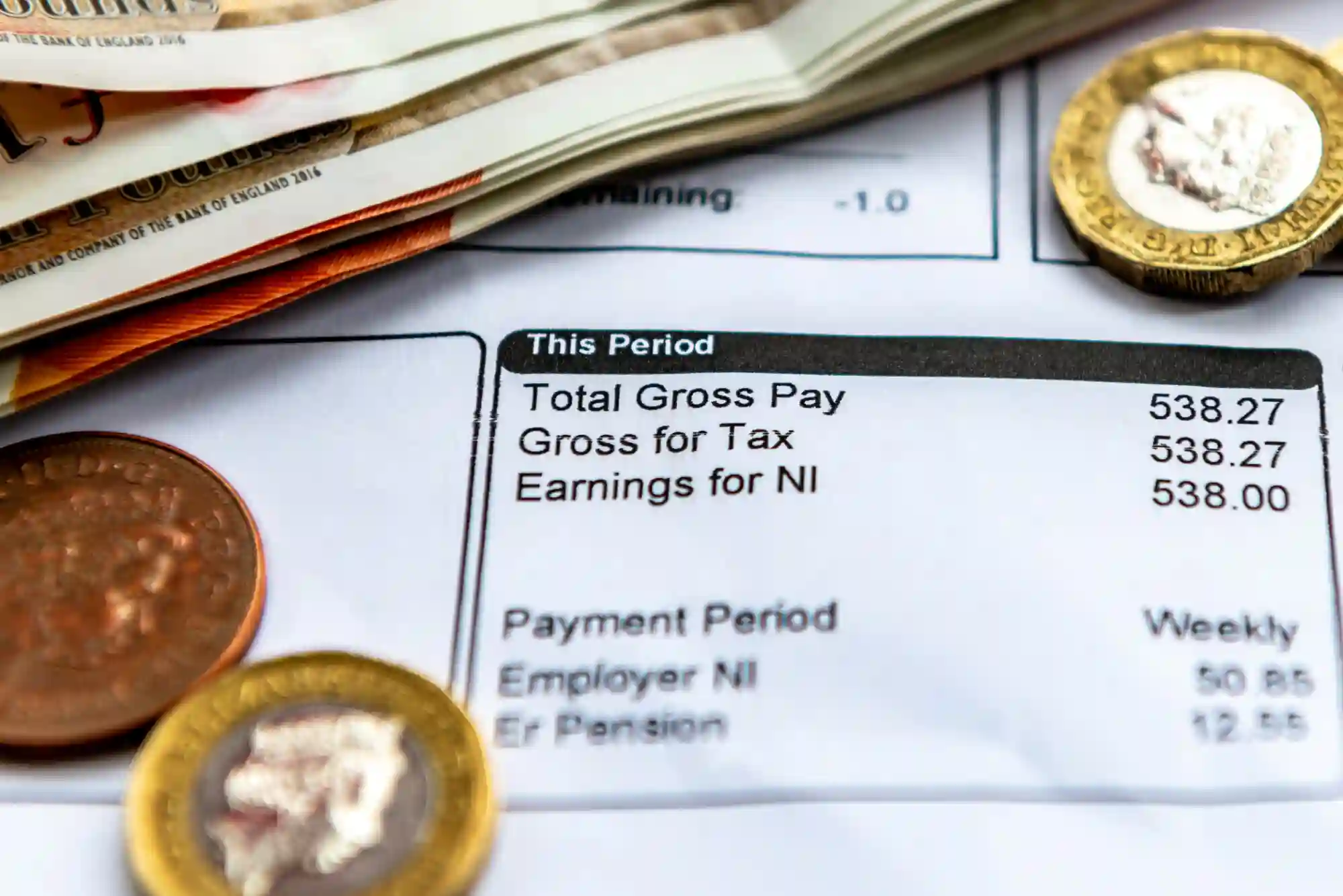
You should also review your payslip regularly. It normally displays gross pay, Income Tax, National Insurance, pension contributions, and your final net payment.
If you believe your employer has deducted too much tax, contact HMRC or check your online tax account. HMRC can help determine whether your tax code needs correcting.
Frequently Asked Questions
How much tax do you pay on a £30,000 salary in the UK?
An employee earning £30,000 generally pays £3,486 in annual Income Tax. Estimated employee National Insurance is £1,394.40. This leaves approximately £25,119.60 annually before pension contributions and other deductions.
How much can you earn before paying tax in the UK?
Most eligible employees can earn £12,570 annually before paying Income Tax during the 2026/27 tax year. Your allowance may be reduced if your income exceeds £100,000.
Is tax automatically deducted from wages in the UK?
Yes, most employees pay Income Tax and National Insurance through PAYE. Their employer calculates and deducts the applicable amounts before paying their wages.
Do you pay 20% tax on your entire salary?
No, most employees do not pay 20% on their entire salary. The standard personal allowance is generally tax-free, and higher rates apply only to the relevant portions of taxable income.
Why am I paying more tax on my payslip?
Your deductions may increase because of a bonus, overtime, a tax-code adjustment, or additional taxable income. Check your payslip and tax code to understand the difference.
Understanding How Much Is Service Tax in India helps individuals and businesses better manage their expenses and financial planning. Knowing the applicable tax rates, relevant GST rules, and potential charges can make financial decisions easier. Staying informed about current tax regulations also helps avoid confusion and ensures better budgeting for everyday services and business transactions.
Conclusion
Understanding how much tax you pay on UK wages makes salary planning easier. Your Income Tax depends on taxable earnings, personal allowances, and the applicable tax bands. National Insurance and other deductions also affect your final take-home pay.


