




Introduction
Understanding profitability is essential for every business. One of the most powerful financial tools for multi-product companies is how to compute the weighted average contribution margin. This metric helps businesses evaluate how different products contribute to overall profits while considering their sales mix.
Many companies sell multiple products with different profit margins. Because of this, calculating a simple contribution margin is not enough. Instead, businesses rely on the weighted average contribution margin to understand overall profitability more accurately.
When managers learn how to compute the weighted average contribution margin, they gain insight into pricing strategies, break-even analysis, and financial planning. For example, fitness franchises like OrangeTheory locations in Mountain View or other service-based businesses often analyze product mixes and service margins to optimize profitability.
This guide explains the concept in simple terms. It also walks you through formulas, examples, and practical applications so you can confidently apply the calculation in real business scenarios.
Understanding Contribution Margin Before Calculating the Weighted Average
Before learning how to compute the weighted average contribution margin, it is important to understand the concept of contribution margin itself.
Contribution margin represents the portion of sales revenue that remains after variable costs are deducted. These remaining funds help cover fixed costs and eventually generate profit. Variable costs include expenses such as materials, production labor, and sales commissions.


The formula for contribution margin is simple:
Contribution Margin = Sales Revenue – Variable Costs
If a product sells for $100 and its variable cost is $60, the contribution margin equals $40. This means each unit contributes $40 toward covering fixed expenses and profits.
However, businesses rarely sell only one product. Companies often offer multiple products or services, each with different margins. This complexity is exactly why learning how to compute the weighted average contribution margin becomes essential.
What Is the Weighted Average Contribution Margin?
The weighted average contribution margin (WACM) measures the average contribution margin of multiple products while considering their relative sales proportions.
In simple terms, it shows how much profit contribution each unit generates across the entire product mix.
For example, imagine a business that sells two products:
Product A generates a high margin but sells less often.
Product B generates a lower margin but sells frequently.
Looking at individual margins does not give the full picture. Instead, calculating the weighted average contribution margin reveals the overall profitability of the combined sales mix.
Businesses use this metric for several purposes. It helps with break-even analysis, pricing strategies, budgeting, and profitability forecasting.
Why Businesses Need the Weighted Average Contribution Margin
Companies that sell multiple products rely heavily on how to compute the weighted average contribution margin to make better financial decisions.
First, it allows businesses to determine the break-even point more accurately. Without considering sales mix, break-even calculations can become misleading.
Second, the weighted average contribution margin helps managers evaluate whether the current product mix is profitable. If a low-margin product dominates sales, overall profitability may decline.
Third, it helps with strategic planning. Businesses can adjust pricing or marketing strategies based on margin contributions.
For example, a fitness franchise like OrangeTheory Mountain View may offer memberships, merchandise, and specialized training programs. Each service generates different margins. By analyzing the weighted average contribution margin, managers can determine which services drive profitability.
Additionally, understanding how to compute the weighted average contribution margin helps businesses identify opportunities to increase profits by adjusting the product mix.
The Formula for Computing the Weighted Average Contribution Margin
Learning how to compute the weighted average contribution margin requires understanding a simple formula.
Weighted Average Contribution Margin =
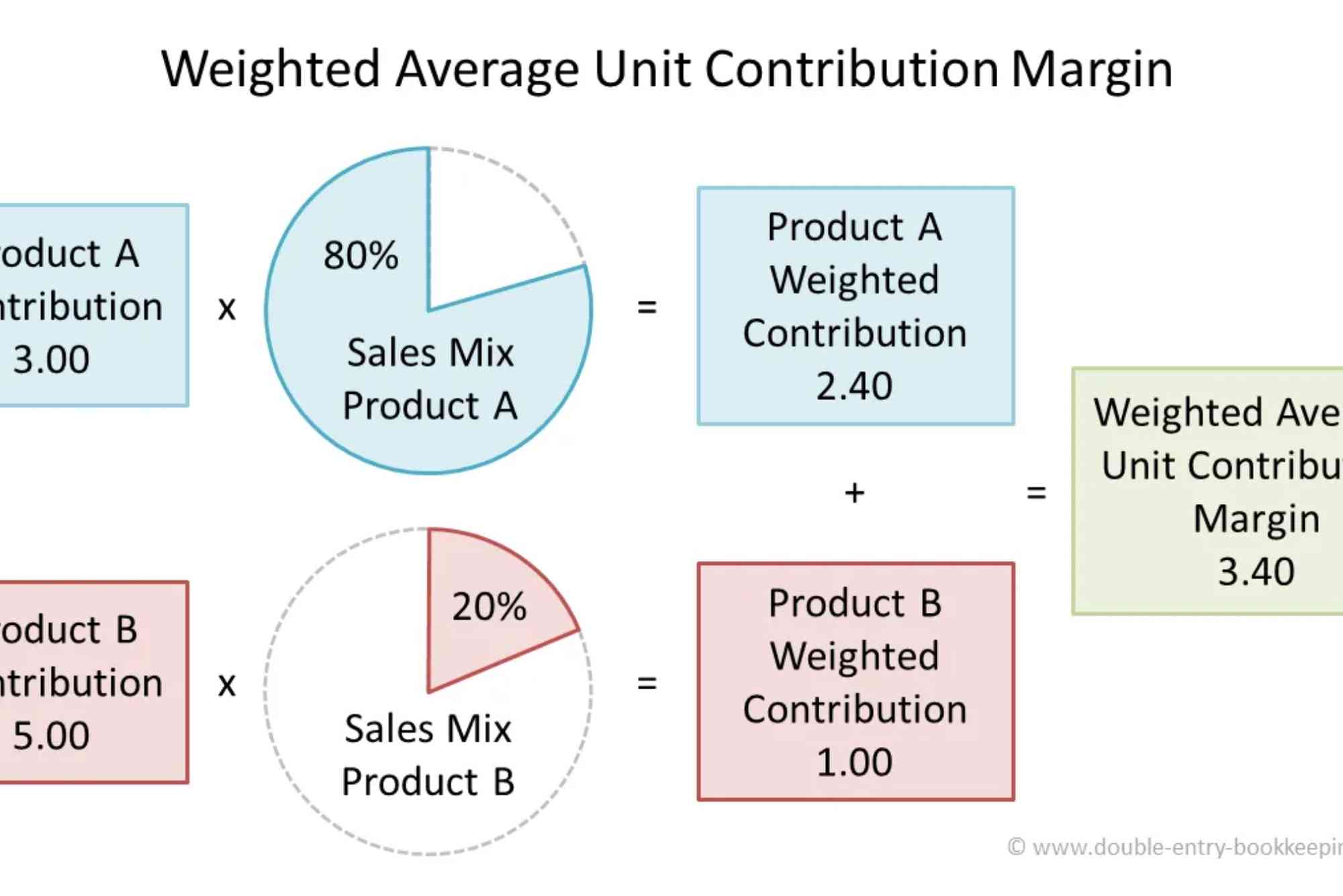
(Sales Mix Percentage × Contribution Margin per Unit) for each product
After calculating each weighted margin, the results are added together to determine the final weighted average.
The sales mix percentage represents the proportion of total sales each product contributes.
This formula allows businesses to combine different contribution margins into a single, meaningful number. The result reflects the overall profitability of the entire product portfolio.
Although the formula may appear technical at first, the calculation becomes straightforward once you break it into smaller steps.
Step-by-Step Explanation of the Calculation
To fully understand how to compute the weighted average contribution margin, it helps to walk through the process step by step.
First, identify the contribution margin per unit for each product. This requires subtracting variable costs from the selling price.
Second, determine the sales mix percentage for each product. The sales mix shows how much each product contributes to total unit sales.
Third, multiply the contribution margin per unit by its corresponding sales mix percentage. This calculation determines the weighted contribution margin for that product.
Finally, add all weighted margins together. The total equals the weighted average contribution margin.
This process allows businesses to convert multiple product margins into a single profitability indicator.
Practical Example of the Weighted Average Contribution Margin
Consider a company that sells two products.
Product A sells for $100 and has a variable cost of $60. The contribution margin is $40.
Product B sells for $80 and has a variable cost of $50. The contribution margin is $30.
Now assume the sales mix looks like this:
Product A represents 40 percent of total sales.
Product B represents 60 percent of total sales.
To calculate the weighted average contribution margin:
Product A: 40% × $40 = $16
Product B: 60% × $30 = $18
Weighted Average Contribution Margin = $34
This result means that every unit sold contributes an average of $34 toward covering fixed costs and profit.
Understanding how to compute the weighted average contribution margin allows businesses to use this number for break-even calculations and profit forecasting.
How Weighted Contribution Margin Supports Break-Even Analysis
One of the main reasons companies learn how to compute the weighted average contribution margin is to perform break-even analysis.
The break-even point shows how many units must be sold before the company begins generating profit.
The formula looks like this:
Break-Even Units = Fixed Costs ÷ Weighted Average Contribution Margin
Because companies sell multiple products, the weighted margin ensures the calculation reflects the true sales mix.
Without this adjustment, businesses could significantly underestimate or overestimate the number of units needed to cover fixed costs.
Common Mistakes When Calculating Weighted Average Contribution Margin
Even experienced managers sometimes misunderstand how to compute the weighted average contribution margin. Several common mistakes can lead to inaccurate results.
One frequent error involves ignoring the sales mix. If businesses use simple averages instead of weighted averages, the results become misleading.
Another mistake occurs when companies fail to update the sales mix regularly. Market demand changes over time, which can alter product proportions and profitability.
Some businesses also confuse contribution margin with gross profit. Although both measure profitability, contribution margin focuses only on variable costs.
Avoiding these mistakes ensures that the weighted average contribution margin remains a reliable decision-making tool.
How Service Businesses Use Weighted Contribution Margins
Although this metric is often associated with manufacturing, service businesses also benefit from learning how to compute the weighted average contribution margin.
Fitness studios, consulting firms, and technology companies typically offer multiple services. Each service generates different revenue and cost structures.
For instance, a fitness studio might offer group classes, personal training sessions, and retail merchandise. Each of these revenue streams has a unique contribution margin.
By analyzing the weighted average contribution margin, managers can determine which services should receive greater marketing focus.
This insight can significantly improve overall profitability.
Strategic Advantages of Understanding Weighted Contribution Margin
Learning how to compute the weighted average contribution margin provides several strategic advantages for business leaders.
First, it improves pricing decisions. Managers can identify products with strong margins and emphasize them in marketing campaigns.
Second, it strengthens budgeting and forecasting. Because the metric reflects actual sales mix, financial projections become more accurate.
Third, it supports product portfolio optimization. Businesses can remove low-margin products or redesign them to improve profitability.
Finally, it helps companies scale operations efficiently. As product lines grow, the weighted average contribution margin ensures profitability remains visible.
For growing businesses, this insight becomes a powerful competitive advantage.
Understanding how to compute the weighted average contribution margin is essential for businesses that sell multiple products or services. This metric provides a clear view of overall profitability by considering the sales mix and contribution margins together.
By calculating the weighted average contribution margin, businesses can perform accurate break-even analysis, improve pricing strategies, and optimize their product portfolios. The calculation itself is simple, but the insights it provides are extremely valuable.
Frequently Asked Questions (FAQs)
What is the weighted average contribution margin?
The weighted average contribution margin represents the average contribution margin of multiple products based on their sales mix. It reflects how each product contributes to overall profitability.
Why is the weighted average contribution margin important?
It helps businesses perform accurate break-even analysis, evaluate product profitability, and make strategic pricing decisions.
How is sales mix used in weighted contribution margin?
Sales mix represents the percentage of total sales each product contributes. This percentage is used to weight the contribution margin of each product.
What is the difference between contribution margin and gross profit?
Contribution margin subtracts only variable costs from sales revenue, while gross profit subtracts the cost of goods sold. Contribution margin focuses on operational profitability.
Can service businesses use weighted average contribution margin?
Yes. Service businesses with multiple services can apply the same concept to evaluate profitability and improve financial planning.
Easy Method to Find Quartiles for Ungrouped Data Sets Quartiles divide an ungrouped data set into four equal parts to help understand how the values are distributed. First, arrange the numbers in ascending order. Then locate the median (Q2), which splits the data in half. The first quartile (Q1) is the median of the lower half, and the third quartile (Q3) is the median of the upper half. This simple method makes it easy to analyze data spread and identify patterns quickly.