



How Much Income Tax in Europe? – A Complete Guide (2026)
Understanding how much income tax in Europe you might pay is crucial if you plan to work, live, or invest on the continent. Tax systems vary widely — from low flat-rate countries to high-tax welfare states. This guide breaks down tax structures, compares key nations, and provides practical insights to help you understand your potential tax obligations.
Europe is a diverse economic region, and income tax rules differ from one country to another. Unlike some regions with uniform systems, each European country sets its own tax brackets, rates, and allowances. Income tax can range from very low flat rates to some of the highest progressive rates in the world.
Whether you are an expat, remote worker, or local employee, knowing how much income tax in Europe you’ll pay allows you to plan your finances wisely. This article will explain tax structures, highlight country comparisons, and answer common questions to make taxation more understandable.
How Income Tax in Europe Works
Progressive vs Flat Tax Systems
Most European countries use progressive tax systems, where higher income is taxed at higher rates. Only a few nations implement flat tax systems, where everyone pays the same percentage regardless of income. Progressive systems aim to distribute tax burdens fairly, meaning higher earners contribute proportionally more.
For example, in Germany or France, income passes through multiple brackets, and only the portion of income in the highest bracket is taxed at the top rate. Your effective tax rate — the average percentage of your total income paid — is usually lower than the top marginal rate.
Tax Residency Rules
Your tax residency determines how much income tax you owe. Spending more than six months in a country usually classifies you as a resident for tax purposes, which may subject you to taxation on worldwide income. Many countries have agreements to prevent double taxation, ensuring you are not taxed twice for the same income.


How Much Income Tax in Europe: Country Comparisons
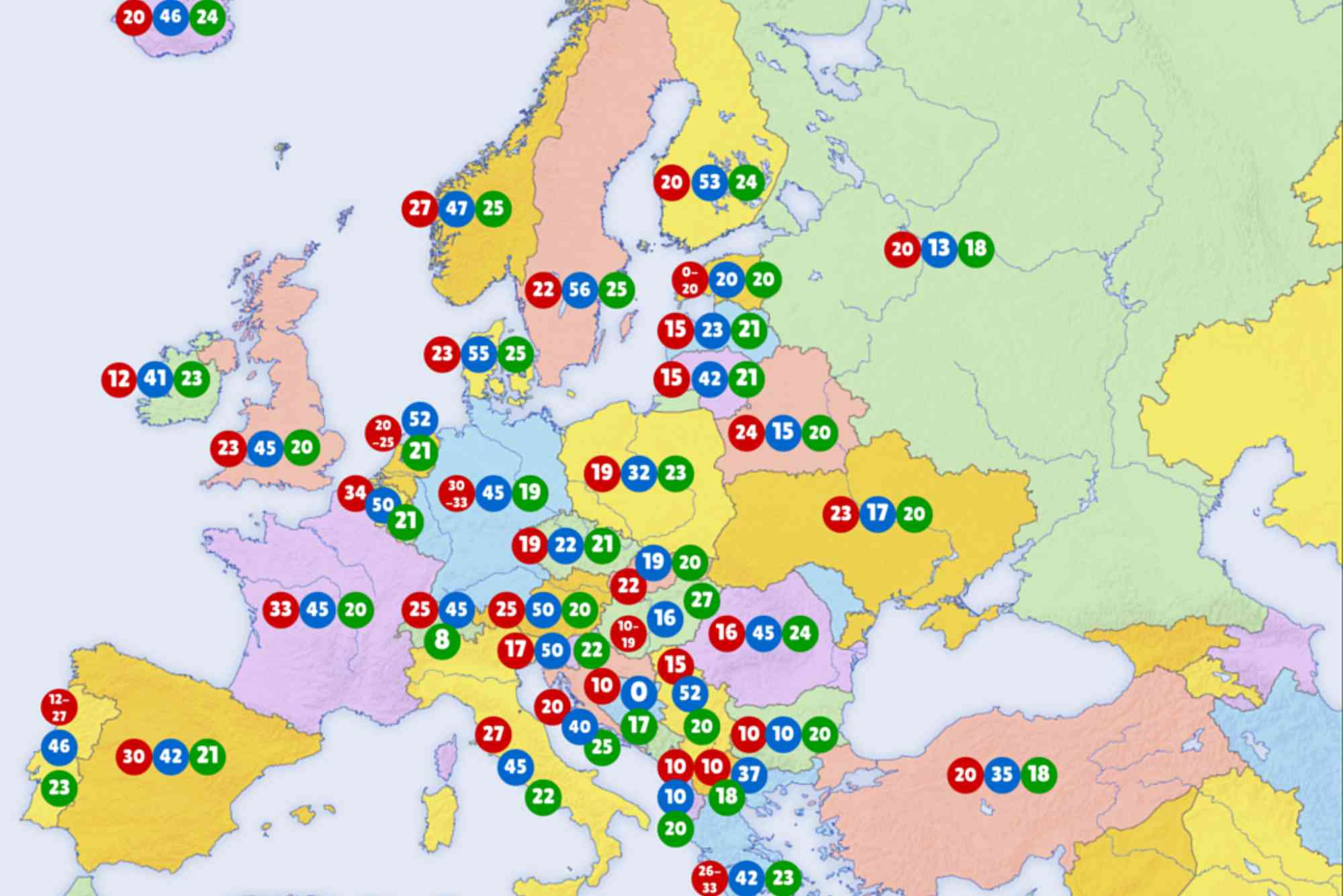
Income tax rates vary dramatically across Europe, with Nordic and Western European countries generally having higher rates than Eastern European nations.
Highest Top Income Tax Rates
- Denmark – around 60%
- France – around 55%
- Austria – around 55%
- Spain, Belgium, Portugal, Sweden – over 50%
These countries use progressive taxation, so only the income exceeding certain thresholds is taxed at the highest rates.
Moderate and Low Top Rates
- Germany, Italy, UK – roughly 45–48%
- Finland, Ireland, Greece – around 40%
- Estonia, Hungary, Czech Republic, Bulgaria, Romania – roughly 10–25%
Eastern European countries often have lower flat or simpler tax systems, while Western and Nordic nations typically use higher rates to fund extensive social services.
Average Tax Burdens
Across Europe, the average top personal income tax rate is approximately 38–40%, although effective rates for middle-income earners are much lower.
Real-World Examples: What You Might Actually Pay
Top Bracket vs Effective Rate
Your top tax bracket only applies to the income portion exceeding the bracket threshold. For instance, if a country’s top rate is 40%, only the income above that threshold is taxed at 40%, not your entire salary.
Personal Allowances
Most European countries offer tax-free allowances, meaning the first portion of your income is exempt from tax. These allowances help middle-income earners reduce their overall tax burden.
Social Security and Other Contributions
Income tax is just one part of deductions. Many countries also require social security contributions, which fund healthcare, pensions, and unemployment benefits. Combined, these contributions can make the total deduction from your paycheck exceed 40–50% in high-tax countries.
How Tax Treaties and Residency Affect Your Tax Bill
Dual Taxation Agreements
If you live in one country but earn income in another, you could face double taxation. Tax treaties between countries allow credits or exemptions so you don’t pay twice on the same income.
EU Rules
EU nations share information to ensure compliance and equal treatment of residents and nationals. However, national laws still determine the exact tax you pay — there is no single EU income tax.
Key Factors That Influence Your Income Tax
Total Income
Higher income usually results in higher taxes due to progressive systems.
Marital Status & Family
Many countries provide tax benefits for married couples and families with children.
Deductions & Credits
Some nations allow deductions for mortgages, retirement contributions, or education costs, reducing taxable income.
Local Taxes
In some countries, local taxes can significantly increase your total income tax liability.
Figuring out how much income tax in Europe you will pay can be complicated, but by understanding the basics and comparing countries, you can get a clear picture of what to expect. High-tax countries provide extensive public services, while low-tax nations may offer simpler systems and higher take-home pay.
Planning ahead ensures you optimize your finances and make informed choices about where to live or work.
FAQs
What is the average income tax rate in Europe?
The average top personal income tax rate in Europe is around 38–40%, though the effective rate for most earners is much lower.
Which European country has the highest income tax?
Denmark currently has one of the highest top personal income tax rates, exceeding 60%.
Do Europeans pay tax on worldwide income?
If you are a tax resident, most countries tax your worldwide income, but double taxation agreements prevent paying twice on the same income.
How do tax brackets work in Europe?
Most countries use progressive brackets, so only the portion of income within each bracket is taxed at that rate.
Are there tax-free allowances?
Yes, nearly all European countries have tax-free allowances, exempting a portion of income from taxation and lowering your effective tax rate.
Does Spain Tax Worldwide Income? Spain taxes residents on their worldwide income, meaning all earnings—both domestic and foreign—must be reported. Non-residents are only taxed on Spanish-source income. Understanding residency rules is crucial, as it determines your tax obligations and helps avoid double taxation through treaties with other countries.