




How to Calculate Weighted Average Contribution Margin
Understanding how to calculate weighted average contribution margin is crucial for businesses managing multiple products. This financial metric helps determine profitability per unit while considering sales mix. It provides insight into how different products contribute to overall profits, helping managers make strategic pricing and production decisions. In this guide, we’ll break down the process, provide practical examples, and highlight common mistakes to avoid.
What is Contribution Margin?
Definition and Importance
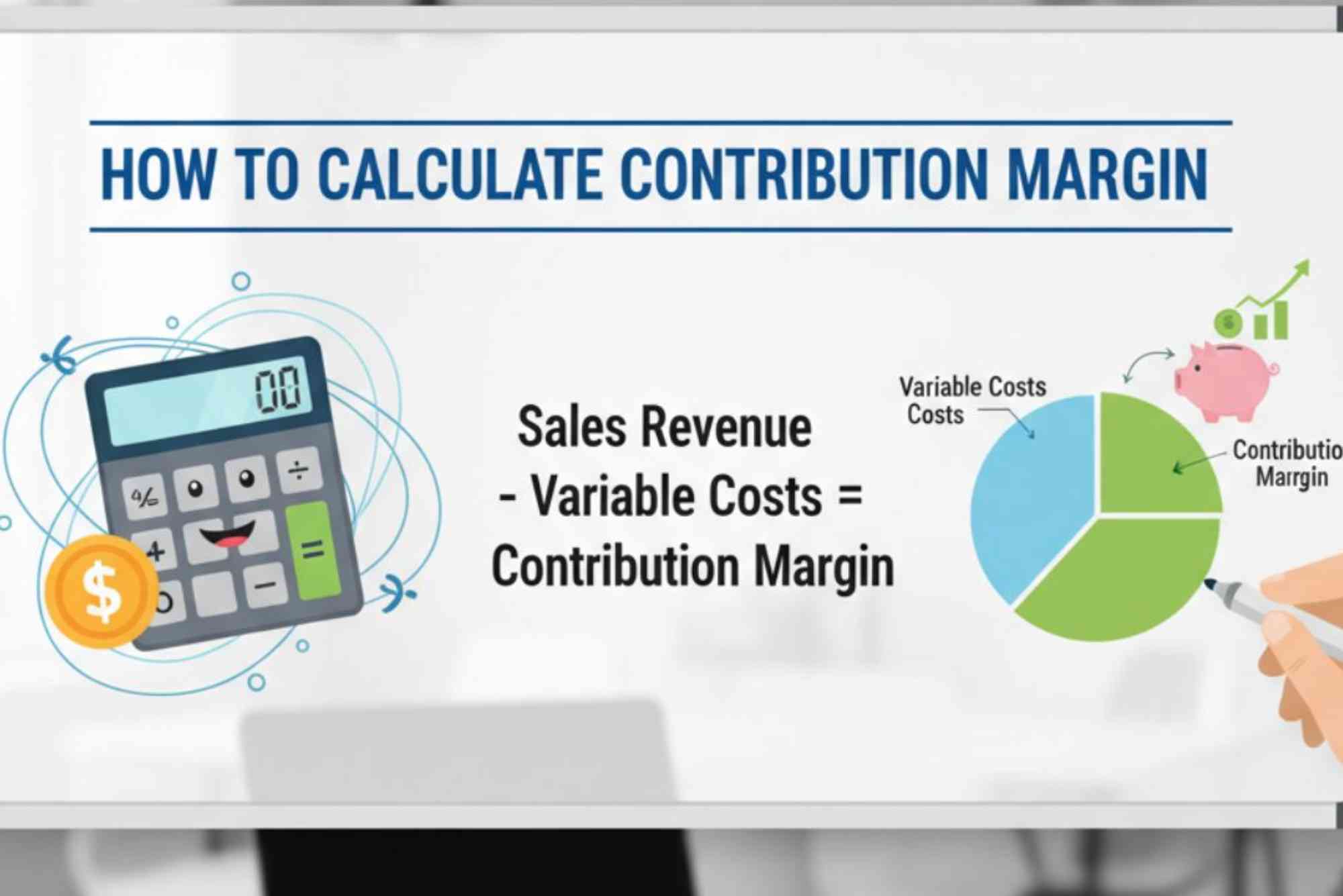
Contribution margin represents the difference between sales revenue and variable costs. It shows how much revenue contributes to covering fixed costs and generating profit. For a single product, it is calculated as:
Contribution Margin = Sales Price per Unit – Variable Cost per Unit
This figure helps businesses determine which products are most profitable and supports pricing, budgeting, and financial forecasting decisions.
Contribution Margin Ratio
The contribution margin ratio is the contribution margin expressed as a percentage of sales. It is calculated as:
Contribution Margin Ratio = (Contribution Margin ÷ Sales Price) × 100


A higher ratio indicates that a larger portion of revenue contributes to covering fixed costs and profit, which is valuable for strategic planning.
Why Weighted Average Contribution Margin Matters
When a company sells multiple products, each with a different contribution margin, a simple average does not reflect actual profitability. The weighted average contribution margin accounts for the proportion of total sales each product represents. This metric allows managers to:
- Evaluate overall profitability across product lines
- Make informed decisions about product prioritization
- Forecast profits more accurately
Without considering weights, companies might misallocate resources or misjudge product performance.
How to Calculate Weighted Average Contribution Margin
Step 1: Determine Contribution Margin per Product
First, calculate the contribution margin for each product by subtracting variable costs from sales revenue. Example:
- Product A: $50 selling price – $30 variable cost = $20 contribution margin
- Product B: $80 selling price – $50 variable cost = $30 contribution margin
Step 2: Calculate Sales Mix Proportion
Next, determine each product’s proportion of total sales. This can be based on units sold or sales revenue. For units sold:
- Product A: 400 units
- Product B: 600 units
- Total units = 1000
Proportion of sales:
- Product A = 400 ÷ 1000 = 0.4
- Product B = 600 ÷ 1000 = 0.6
Step 3: Multiply Contribution Margin by Sales Mix
Multiply each product’s contribution margin by its proportion of total sales:
- Product A = $20 × 0.4 = $8
- Product B = $30 × 0.6 = $18
Step 4: Sum the Weighted Margins
Add the results to find the weighted average contribution margin:
Weighted Average Contribution Margin = $8 + $18 = $26
This $26 represents the average contribution per unit across the product mix.
Step 5: Calculate Weighted Average Contribution Margin Ratio (Optional)
To express it as a percentage, divide the weighted average contribution margin by the weighted average selling price:
Weighted Average Selling Price = (Product A Price × Proportion) + (Product B Price × Proportion)
Weighted Average Selling Price = ($50 × 0.4) + ($80 × 0.6) = $68
Weighted Average Contribution Margin Ratio = ($26 ÷ $68) × 100 ≈ 38.2%
This ratio helps businesses understand overall profitability relative to total revenue.
Common Mistakes to Avoid
Ignoring Sales Mix
Calculating a simple average instead of a weighted average misrepresents profitability. Always account for each product’s sales proportion.
Using Incorrect Variable Costs
Ensure variable costs include only costs that vary with production. Fixed costs should not be included in contribution margin calculations.
Overlooking Units vs Revenue
Decide whether to use units sold or revenue for weighting. Using the wrong base can lead to inaccurate results.
Practical Example
Consider a company with three products:
- Product X: Selling price $100, variable cost $60, 200 units sold
- Product Y: Selling price $150, variable cost $90, 300 units sold
- Product Z: Selling price $200, variable cost $120, 500 units sold
- Contribution Margins:
- X = $40, Y = $60, Z = $80
- Total units = 200 + 300 + 500 = 1000
- Sales Mix:
- X = 200 ÷ 1000 = 0.2
- Y = 300 ÷ 1000 = 0.3
- Z = 500 ÷ 1000 = 0.5
- Weighted Contribution Margins:
- X = $40 × 0.2 = $8
- Y = $60 × 0.3 = $18
- Z = $80 × 0.5 = $40
- Weighted Average Contribution Margin = $8 + $18 + $40 = $66
This example clearly shows how considering sales mix gives a realistic picture of profitability.
Using Weighted Average Contribution Margin in Decision Making
Pricing Strategy
Businesses can prioritize products with higher weighted contribution margins for promotions or discounts.
Production Planning
Helps decide which products to produce more of when resources are limited.
Break-Even Analysis
Weighted contribution margin is used in multi-product break-even calculations to understand the overall sales needed to cover costs.
Performance Evaluation
Managers can track how changes in sales mix impact profitability over time.
Tips for Accuracy
- Use consistent units (dollars or units sold) across calculations
- Update data regularly to reflect sales trends
- Consider seasonal variations in product mix
- Validate variable cost data to avoid miscalculations
financer.ae is a modern online platform designed to simplify financial decisions for individuals and businesses. It connects users with trusted loan providers, financial tools, and expert guidance, helping them compare options easily. With a user-friendly interface and reliable resources, financer.ae supports smarter borrowing, better financial planning, and secure transactions, making it a valuable destination for managing personal and business finances effectively.
FAQ
What is the formula for weighted average contribution margin?
Multiply each product’s contribution margin by its sales proportion, then sum the results.
Why is weighted average contribution margin important?
It accurately reflects multi-product profitability and helps with pricing and production decisions.
How do I calculate contribution margin ratio for multiple products?
First, calculate each product’s contribution margin ratio, weight it by sales proportion, then sum for the weighted average.
Can I use revenue instead of units for weighting?
Yes, weighting by revenue is also valid if you want the metric to reflect dollar contribution rather than units.
How often should I calculate weighted average contribution margin?
Ideally, monthly or quarterly, especially if sales mix or costs fluctuate.
What’s the difference between simple and weighted average contribution margin?
Simple average ignores sales mix, while weighted average accounts for each product’s proportion of total sales.
Calculating weighted average contribution margin is essential for businesses with multiple products. It gives a realistic view of overall profitability, guiding pricing, production, and investment decisions. By following the step-by-step method and considering common pitfalls, managers can make informed choices and optimize profits.
Start applying weighted average contribution margin today to improve your financial analysis and product strategy. Regularly reviewing your metrics ensures smarter business decisions and sustainable growth.
