



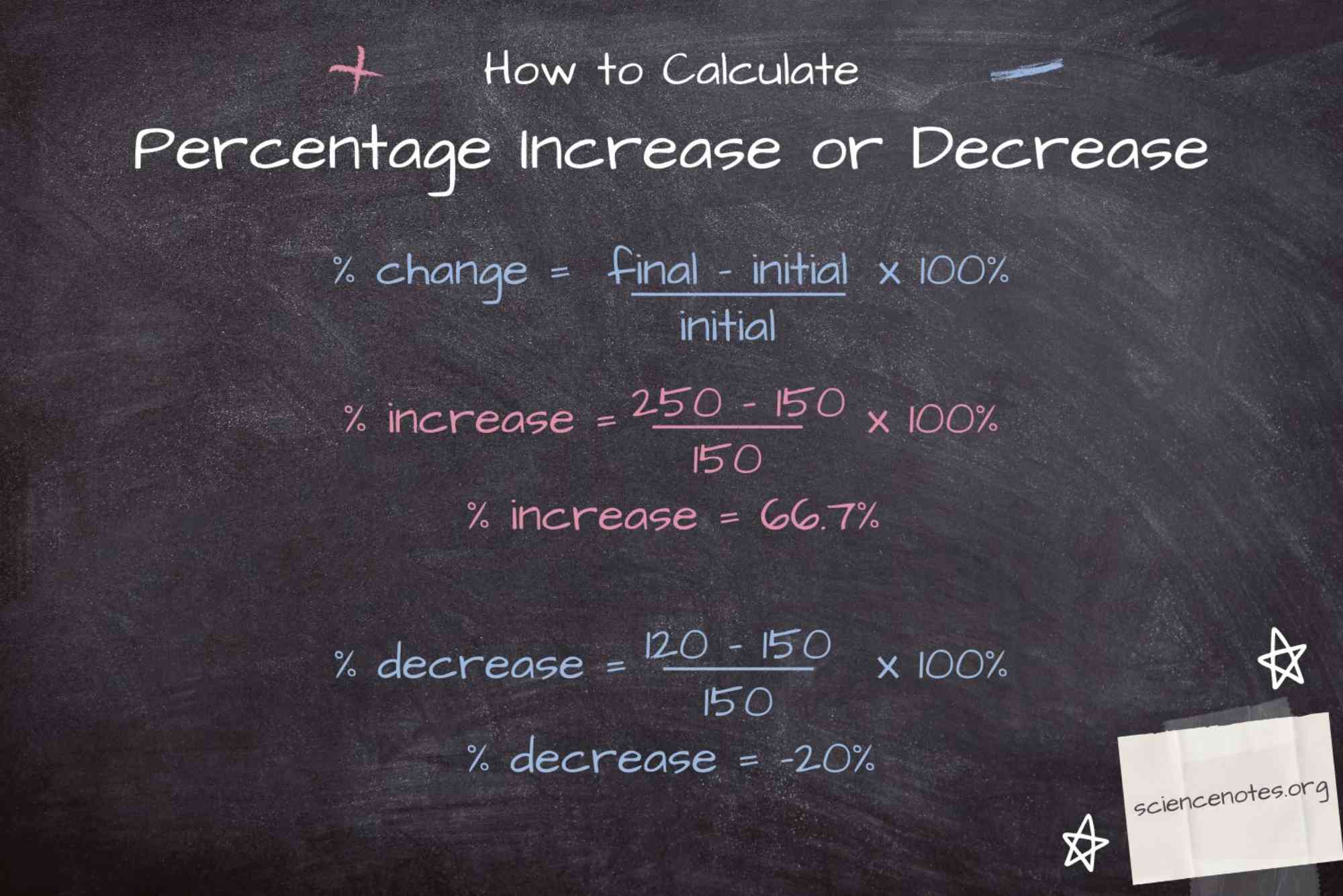
How to Calculate Increase
Understanding how to calculate increase is a vital skill in finance, business, and everyday life. Whether you are dealing with prices, salaries, investments, or statistics, knowing the exact method to measure growth helps in making informed decisions. This guide explains step-by-step methods, formulas, examples, and tips for calculating both percentage and absolute increases effectively.
What Is Increase?
An increase refers to the growth or rise in the value, amount, or quantity of something over time. It is commonly expressed in two ways: as an absolute number or as a percentage.
Absolute Increase
Absolute increase is the simple difference between the new value and the original value. It tells you exactly how much something has grown.
Formula:
Absolute Increase = New Value − Original Value
Example:
If a product’s price rises from $50 to $65, the absolute increase is $65 − $50 = $15.
Percentage Increase
Percentage increase expresses the growth relative to the original value. This method is more useful when comparing growth across different amounts.


Formula:
Percentage Increase = (Absolute Increase ÷ Original Value) × 100
Example:
Using the same product, the percentage increase = (15 ÷ 50) × 100 = 30%.
Step-by-Step Guide on How to Calculate Increase
Knowing the formulas is useful, but applying them correctly is crucial. Here’s a clear step-by-step guide.
Identify Original and New Values
The first step is to identify the original value and the new value. This could be a price, salary, population, or investment amount.
Calculate the Absolute Increase
Subtract the original value from the new value. This gives you the raw amount of increase.
Calculate the Percentage Increase
Divide the absolute increase by the original value and multiply by 100 to get the percentage increase.
Interpret the Result
Understand what the increase means in context. For example, a 5% salary increase may be significant in one industry but modest in another.
Real-Life Examples of Calculating Increase
Understanding how to calculate increase becomes easier with practical examples.
Example 1: Salary Increase
Suppose your monthly salary rises from $3,000 to $3,450.
Absolute Increase = 3,450 − 3,000 = $450
Percentage Increase = (450 ÷ 3,000) × 100 = 15%
Example 2: Price Increase
If the price of groceries rises from $200 to $250:
Absolute Increase = 250 − 200 = $50
Percentage Increase = (50 ÷ 200) × 100 = 25%
Example 3: Investment Growth
An investment of $5,000 grows to $6,000:
Absolute Increase = 6,000 − 5,000 = $1,000
Percentage Increase = (1,000 ÷ 5,000) × 100 = 20%
Common Mistakes to Avoid
Calculating increase might seem simple, but errors can occur. Avoid these common mistakes:
Confusing Absolute and Percentage Increase
Always know whether you need the exact difference or the growth relative to the original amount.
Using the Wrong Original Value
The original value must always be the starting point. Using the new value by mistake will give incorrect results.
Ignoring Units
Ensure consistency in units. Don’t mix dollars with percentages or kilograms with pounds.
Tips to Calculate Increase Quickly
Use a Calculator for Large Numbers
For big numbers or multiple calculations, a calculator ensures accuracy.
Double-Check Your Formula
Always verify whether you are calculating absolute or percentage increase.
Practice with Real-Life Data
Track prices, salaries, or investments to practice calculating increase in daily life.
Why Calculating Increase Matters
Knowing how to calculate increase is essential in several areas:
- Finance: Track investment growth or inflation.
- Business: Measure sales growth, revenue, or profit increase.
- Personal Budgeting: Monitor expenses, bills, or savings growth.
- Education: Understand statistics and math problems accurately.
financer.ae is a modern online platform designed to simplify financial decisions for individuals and businesses. It connects users with trusted loan providers, financial tools, and expert guidance, helping them compare options easily. With a user-friendly interface and reliable resources, financer.ae supports smarter borrowing, better financial planning, and secure transactions, making it a valuable destination for managing personal and business finances effectively.
Frequently Asked Questions
What Is the Formula to Calculate Increase?
The formula depends on whether you need the absolute or percentage increase. Absolute increase is New Value minus Original Value, and percentage increase is (Absolute Increase ÷ Original Value) × 100.
How Do You Calculate a 10% Increase?
Multiply the original number by 10% (or 0.10) and add it to the original number.
Example: $200 × 0.10 = $20, New Value = 200 + 20 = $220
Can Increase Be Negative?
Yes, if the new value is lower than the original, it is a decrease. A negative increase indicates a drop.
Is Percentage Increase Always Based on Original Value?
Yes, the original value is the reference point to measure growth. This ensures consistency in comparisons.
How Do You Calculate Increase in Salary?
Subtract the old salary from the new salary to get the absolute increase, then divide by the old salary and multiply by 100 to get the percentage increase.
Mastering how to calculate increase helps in finance, business, and daily life. Understanding both absolute and percentage increases allows better decision-making and analysis. Practice with real examples like salaries, prices, or investments to strengthen your skills.
Start calculating your growth today, whether for personal finance or business, and make smarter financial decisions.