




Introduction
The question of who is the inventor of calculator is more complex than it may seem. The calculator did not come from a single invention or one person alone. Instead, it evolved over centuries through many brilliant minds. Each inventor contributed ideas that slowly shaped the modern calculating machines we use today. Understanding who is the inventor of calculator means exploring a long journey of mathematics, mechanics, and technology.
Today, calculators are everywhere, from classrooms to smartphones. However, their origins go back hundreds of years. Early humans always needed tools to calculate numbers. Over time, this need led to mechanical devices that gradually became more advanced. So, when we ask who is the inventor of calculator, we must look at multiple inventors who played key roles in its development.
Early Beginnings of Calculation Tools
Long before modern machines existed, humans used simple tools for counting. The abacus is one of the earliest known devices used for calculations. It was used in ancient civilizations like China, Egypt, and Mesopotamia. Although it is not a modern calculator, it laid the foundation for future inventions.
These early tools show that the idea behind calculating machines existed thousands of years ago. People needed faster and more accurate ways to compute trade, taxes, and engineering tasks. This growing need pushed inventors to develop mechanical solutions.
So, when discussing who is the inventor of calculator, we must acknowledge that early counting systems were the first step toward innovation.
The First Mechanical Calculator
The first major breakthrough in calculator history came in the 17th century. A French mathematician named Blaise Pascal is often credited as one of the earliest inventors of a mechanical calculator. He created a device known as the Pascaline around 1642.


The Pascaline could perform addition and subtraction using gears and wheels. It was designed to help Pascal’s father, who worked as a tax collector. This invention was groundbreaking because it showed that machines could assist with mathematical operations.
However, the Pascaline had limitations. It was expensive, difficult to produce, and could only perform basic calculations. Still, it marked a major milestone in answering who is the inventor of calculator in early history.
Advancements by Gottfried Wilhelm Leibniz
Another important figure in the story of who is the inventor of calculator is Gottfried Wilhelm Leibniz. He improved upon Pascal’s design in the late 1600s. Leibniz created a machine called the Step Reckoner.
The Step Reckoner could perform addition, subtraction, multiplication, and division. This was a major improvement compared to earlier devices. Leibniz also introduced the stepped drum mechanism, which influenced future calculator designs.
His work played a crucial role in advancing mechanical computation. Even though his machine was not perfect, it moved humanity closer to modern calculators.
The Evolution During the 19th Century
The 19th century brought significant progress in computing machines. Charles Babbage, an English mathematician, is another key name when discussing who is the inventor of calculator.
Babbage designed the Difference Engine and later the Analytical Engine. These machines were not simple calculators but early concepts of programmable computers. The Analytical Engine, in particular, included many features of modern computing systems, such as memory and processing units.
Although Babbage never fully completed his machines, his ideas were revolutionary. He is often called the father of the computer because his work influenced later digital calculators and computers.
Transition to Electronic Calculators
The next major leap in calculator history came in the 20th century. Mechanical systems were replaced with electronic components. This shift transformed the entire concept of calculation devices.
During the 1960s, companies began developing electronic desktop calculators. These machines used transistors instead of gears, making them faster and more reliable. Technology companies played a major role in this transformation.
At this stage, the question of who is the inventor of calculator becomes less about one person and more about technological evolution. Many engineers contributed to making calculators smaller, faster, and more affordable.
The Rise of Modern Digital Calculators
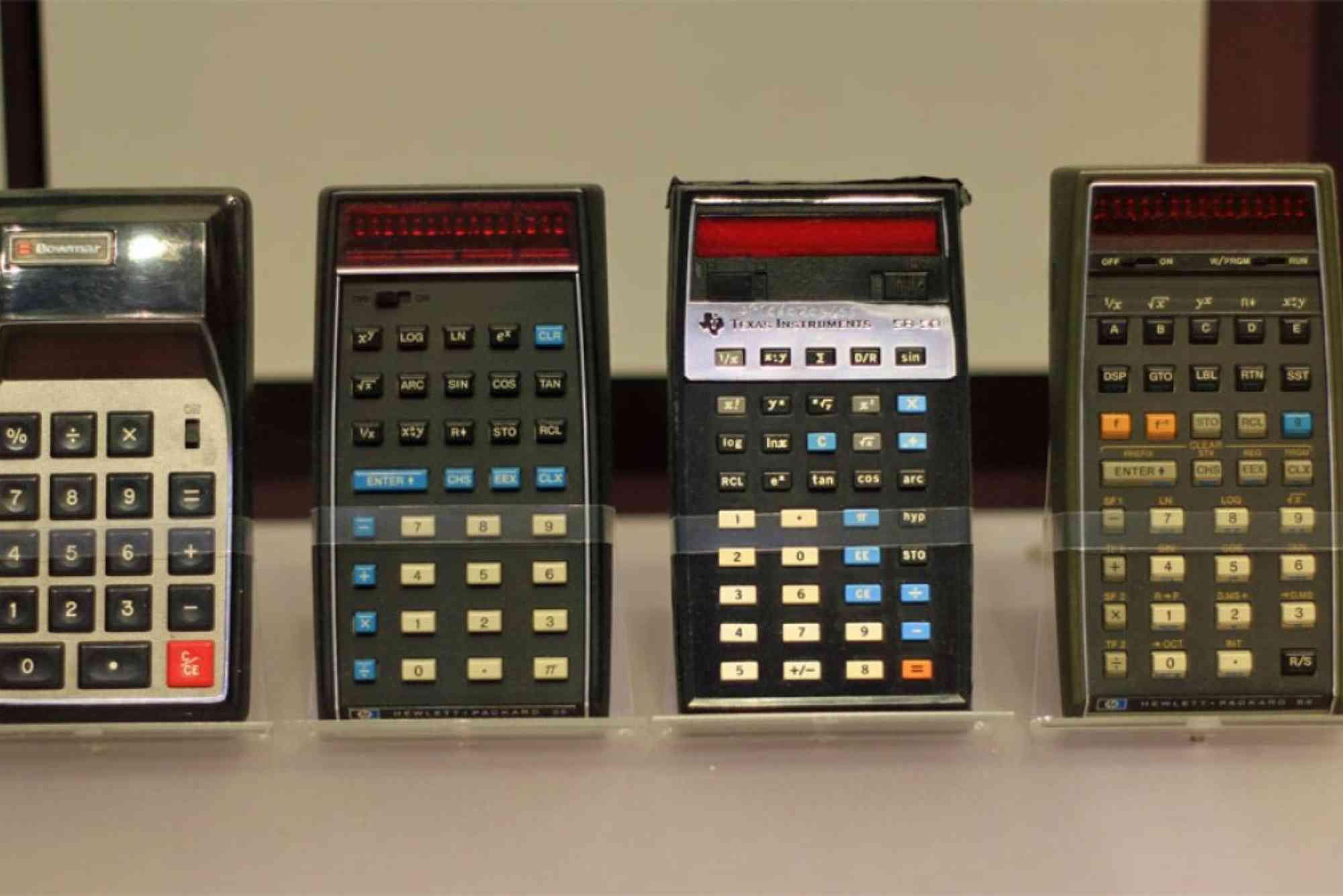
By the 1970s, calculators became widely available to the public. Portable electronic calculators replaced bulky machines. They were used in schools, offices, and homes. This era marked a major shift in education and business practices.
The introduction of microchips allowed calculators to become extremely compact. Soon, they were integrated into watches, phones, and computers. Today, calculators are no longer standalone devices but part of digital ecosystems.
So, when we explore who is the inventor of calculator, we realize that modern calculators are the result of continuous innovation rather than a single invention.
Importance of Calculators in Today’s World
Calculators are essential tools in modern life. They are used in science, engineering, finance, and education. Their accuracy and speed make complex calculations simple and efficient.
From basic arithmetic to advanced mathematical functions, calculators support millions of users daily. Even smartphones now include advanced calculator applications that go far beyond simple calculations.
Understanding who is the inventor of calculator helps us appreciate how far technology has come. It also shows how human creativity solves real-world problems over time.
Who Is the Inventor of Calculator in Reality
If we answer directly, there is no single inventor of the calculator. Instead, it is the result of contributions from multiple individuals across centuries. Blaise Pascal, Gottfried Wilhelm Leibniz, and Charles Babbage are among the most important figures.
Each of them played a role in shaping the development of calculation tools. Later engineers and scientists transformed these mechanical ideas into electronic systems. Therefore, the question who is the inventor of calculator has a historical answer rather than a single name.
Evolution Summary of Calculator Technology
The journey of calculators shows continuous improvement. It started with simple counting tools and evolved into advanced digital systems. Each stage of development built upon the previous one.
Mechanical inventions introduced the idea of automated calculation. Electronic innovations made it faster and more efficient. Today, software-based calculators offer powerful features on digital devices.
This evolution highlights how human innovation never stops. It also explains why the answer to who is the inventor of calculator is shared among many pioneers.
What Does Expat Mean? Simple Definition Explained An expat, short for expatriate, is a person who lives outside their native country for work, study, or personal reasons. Expats may stay temporarily or long-term while adapting to a new culture, job environment, and lifestyle. They often move for better career opportunities, education, or improved living conditions abroad. It is common worldwide
FAQs
Who is known as the father of the calculator?
Blaise Pascal is often considered the father of the mechanical calculator due to his invention of the Pascaline.
Did one person really invent the calculator?
No, the calculator was not invented by one person. It developed over centuries through multiple inventors.
What was the first calculator called?
The first mechanical calculator was called the Pascaline, created by Blaise Pascal in the 17th century.
Who improved the calculator after Pascal?
Gottfried Wilhelm Leibniz improved the design by creating a machine that could also perform multiplication and division.
How did modern calculators develop?
Modern calculators developed through electronic technology, microchips, and digital engineering in the 20th century.
The story of who is the inventor of calculator is a journey through time. It is not the achievement of a single individual but a collective effort of many brilliant minds. From ancient counting tools to modern digital devices, calculators have evolved dramatically.
